Flood maps tell you the odds for an area. A viewing can tell you what has actually happened in one house, if you know where to look. Storm Austen brought Status Orange rain warnings to six counties on the night of 22 October 2026, and Met Éireann warned that localised flooding was possible across the country (RTÉ). Start with the map: is my house at risk of flooding? explains the OPW flood zones and how to check any address. Then use the viewing for what no map can show.
Signs of past flooding to look for at a viewing
Water leaves traces, and a quick redecoration rarely hides all of them. Walk the ground floor and the outside slowly, and look for:
- Lines at one height. Staining or a tide mark at the same level around a room, or on garden walls, sheds and garage doors, is the classic sign of standing water.
- New finishes low down only. Fresh plaster, new skirting boards or new paint on the lower part of the walls, or one ground-floor room redone in an otherwise dated house. Ask why.
- Damp you can smell. A musty smell, dehumidifiers running, or windows open on a cold day.
- Floors that have moved. Warped timber, lifting tiles, or new flooring on the ground floor only.
- Flood protection already fitted. Door barriers or barrier slots, airbrick covers, a non-return valve on the drains or sockets set unusually high. They are useful protection, and also a sign that someone had reason to fit them.
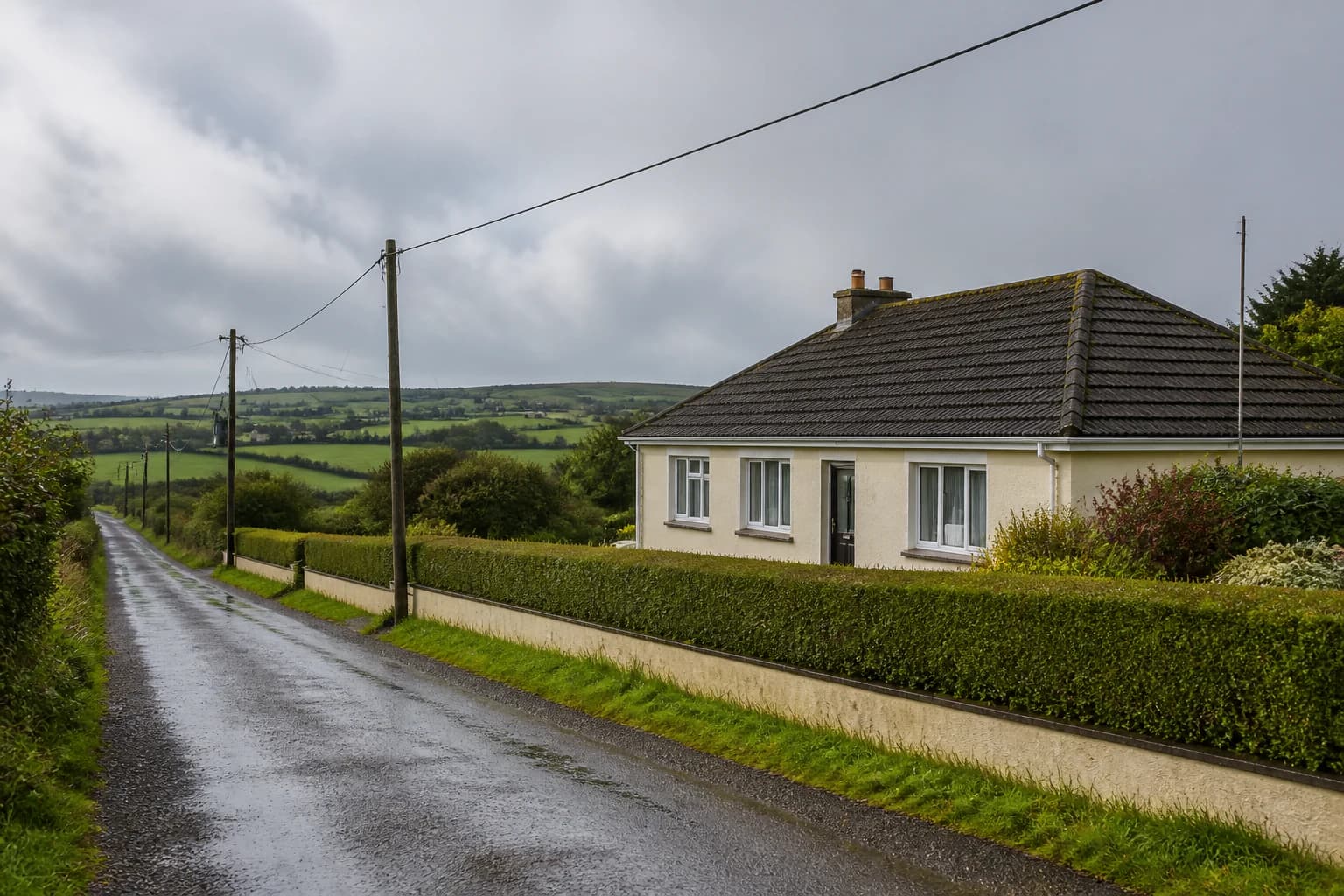
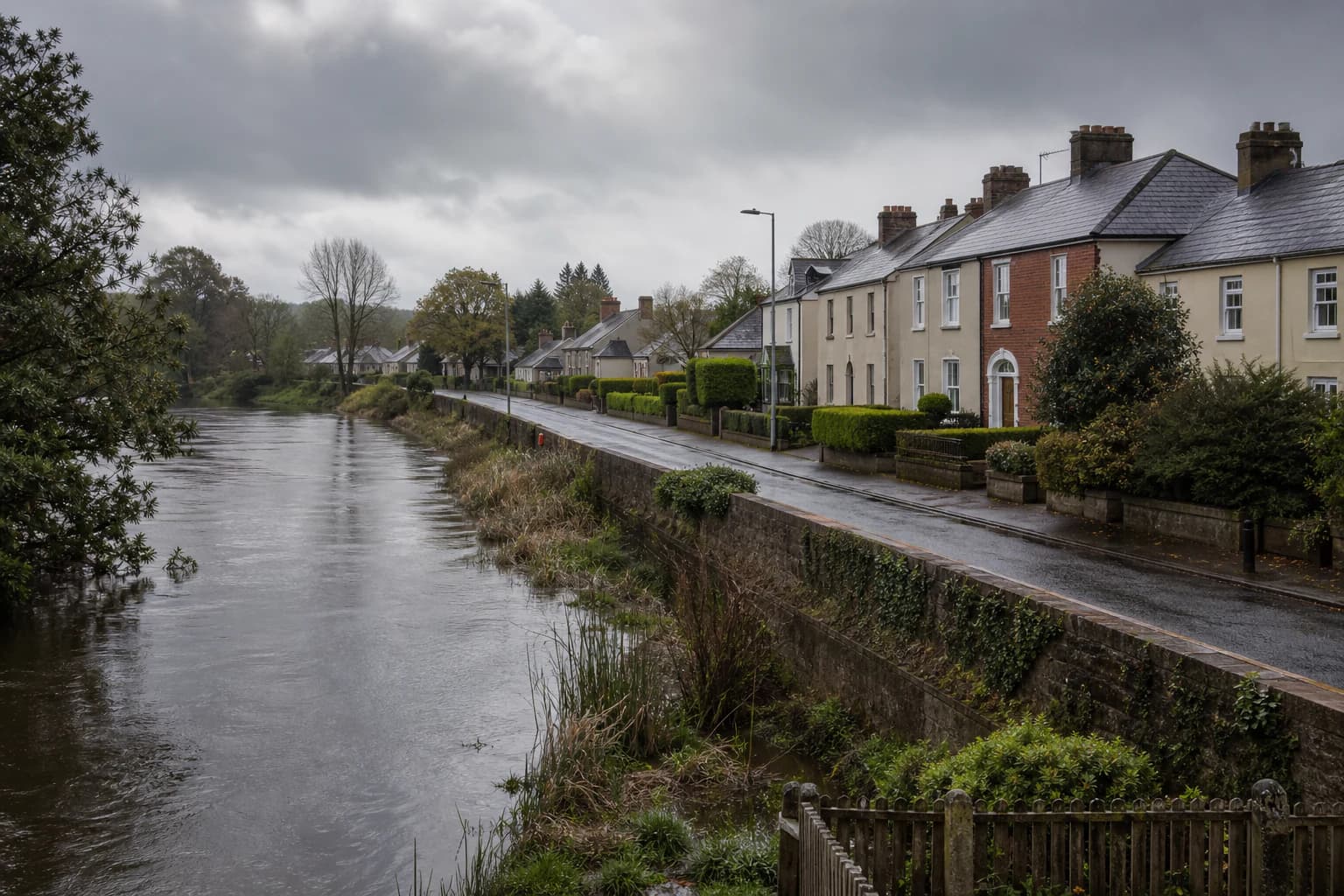
- The lie of the land. A house below the level of the road, a stream or river close by, standing water in the garden or blocked gullies outside. If you can, go back after heavy rain and see how the site drains.
What to ask the seller
- Has the house or the garden ever flooded? When, how deep, from where (a river, the sea, heavy rain or a drain) and what was repaired or replaced afterwards.
- Has there been a flood insurance claim? Ask what the current home insurance covers for flooding, and whether it carries a flood exclusion or a higher excess.
- Is the area defended? 57 completed OPW flood relief schemes protect over 13,640 properties nationally, and since 2014 the OPW has shared completed-scheme data with Insurance Ireland so insurers can reflect it. A house inside a finished scheme is a different proposition from one with no defence planned.
Ask your solicitor to put the flooding question to the seller’s solicitor in writing as well, so the answer is on the record before you sign.
Check the records for the address
What you saw at the viewing is half the picture. The other half is on record:
- Recorded past floods. The OPW’s floodinfo.ie maps past flood events across the 26 counties (6,493 in the counts we derived from OPW data). Search the address and look for events nearby, and when they happened.
- The flood zone. Whether the address sits in Flood Zone A, B or C, and whether a mapped zone comes close to it.
- An insurance quote. Get a real quote for the address before you go sale agreed. The CCPC’s home insurance guide says a buildings policy usually covers flooding, with some restrictions, but usually not where flooding is likely to happen.
- A survey. A pre-purchase survey can check for damp and signs of water damage that are easy to miss at a viewing.
A PropertyPack report puts the records side in one place for any Eircode: the OPW flood zone at the property and within 250 m, recorded past floods within 1 km, and the OPW’s 2050s future-flood scenario where it is mapped.
If you find signs of flooding
A house that has flooded is not automatically one to walk away from. What matters is when it happened, how bad it was, what has changed since (repairs, defences, drainage) and whether you can insure it. Your lender will want buildings insurance in place before the mortgage is drawn down, so confirm flood cover is available, and at what cost, before you are committed. The flood insurance guide explains how Irish insurers decide.
Flood is one of 18 checks in every report
Enter the Eircode for a free snapshot in about a minute, then the full report for the flood zone, recorded floods nearby and 17 other official checks. For the rest of the walk-round, see the questions to ask when viewing a house.
About this article
Written by the PropertyPack.ie team and published 22 October 2026. Figures render directly from the official datasets behind our reports, so they update when the underlying record does. General information for Irish home buyers, not legal, financial or tax advice.