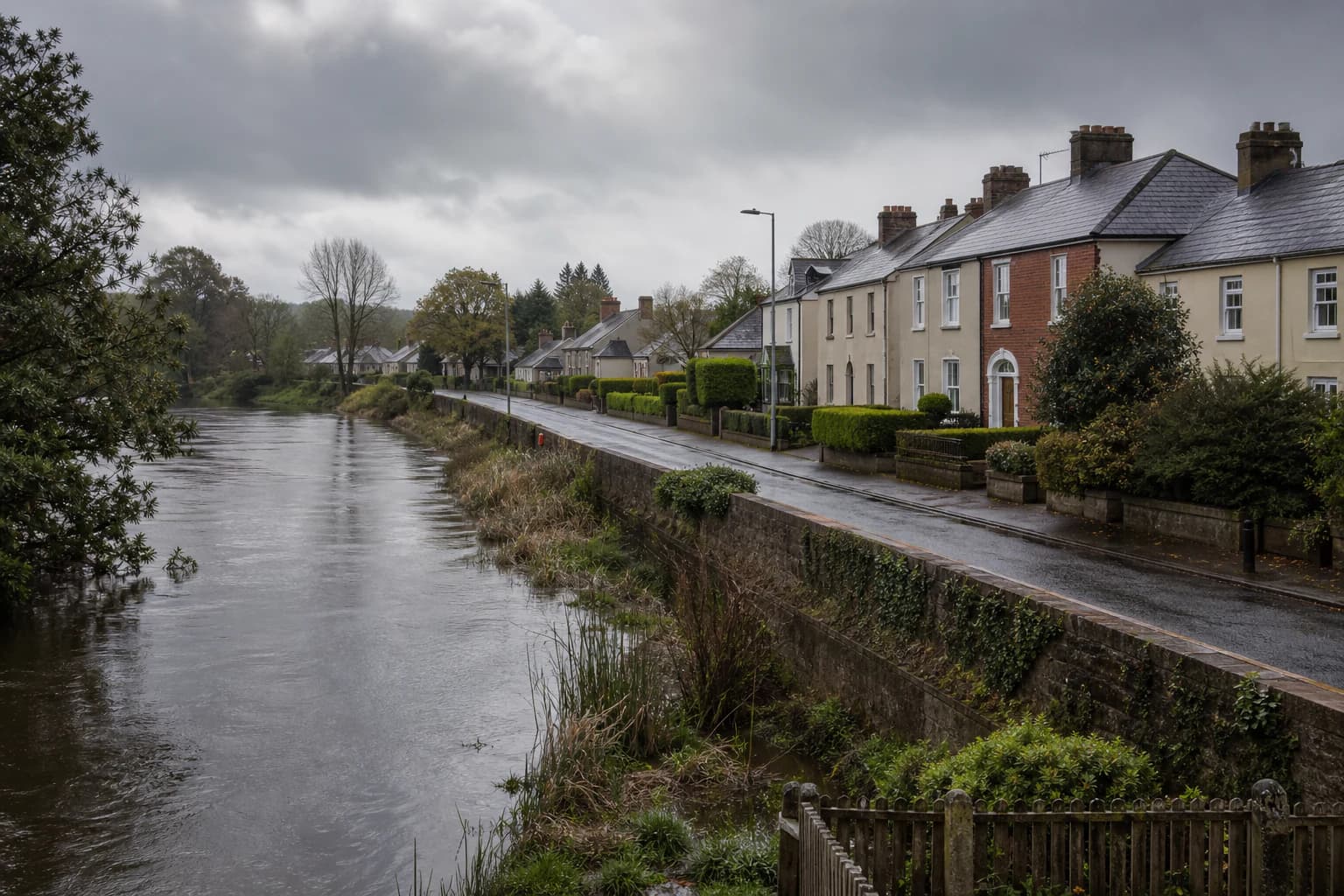
“Is the house in a flood zone?” is one of the first questions worth answering about any Irish property, before the survey, before the bid. The good news: Ireland’s flood zones are public, checking an address is free, and the system behind the maps is simpler than it looks. Here’s what Flood Zones A, B and C actually mean, how to check any address in a few minutes, and (just as important) what the maps can’t tell you.
What Flood Zones A, B and C mean
Irish planning uses three flood zones, defined in The Planning System and Flood Risk Management Guidelines (Department of Housing & OPW, 2009). They describe the probability of river or coastal flooding for an area, not a prediction for any single building:
| Zone | Probability of flooding | In plain terms |
|---|---|---|
| Zone A | Highest: 1-in-100 or greater per year from rivers, 1-in-200 or greater from the sea | Flooding has to be a live consideration |
| Zone B | Moderate: between 1-in-1000 and Zone A’s thresholds | Lower odds, but not negligible |
| Zone C | Low: less than 1-in-1000 per year | Most of the country sits here |
The zones were designed to steer planning decisions (where new housing should and shouldn’t go), but they’ve become the shared vocabulary for buyers, surveyors and insurers talking about flood risk. When a solicitor or engineer asks “what zone is it in?”, this is what they mean.
How to check a flood zone by address
Two free routes, and they complement each other:
- The OPW’s official maps. The Office of Public Works publishes Ireland’s national flood mapping at floodinfo.ie. Search by address or Eircode and you can view river, coastal and surface-water flood extents, plus recorded past flood events near the property. It’s the authoritative source, though reading the map layers takes a little patience.
- An Eircode check. Enter the property’s Eircode on PropertyPack’s flood check and the flood picture for that address comes back as one of the report’s 18 official checks, useful when you want flood answered alongside radon, planning, BER and the rest in a single pass.
Whichever route you take, look at past flood events as well as zones. The OPW’s live database records thousands of past flood reports across the 26 counties (6,493 in the counts we derived from OPW floodinfo.ie data), and a recorded event near an address is exactly the kind of thing sellers forget to mention and insurers ask about directly.
What the maps can’t tell you
A flood zone is a statement about an area’s probability, not a verdict on a building. Before you treat any map answer as final:
- Floor levels matter. A house built above surrounding ground can sit in a mapped extent and stay dry; a basement flat in Zone C can still flood from a blocked drain.
- Defences change the picture. 57 completed flood relief schemes protect over 13,640 properties nationally (OPW), and a further pipeline under the National Development Plan targets around 23,000 more. If the area is defended, that is genuinely good news, and worth naming to an insurer.
- Insurers run their own models. The public zones are the planning system’s view; insurers overlay their own claims data and flood models, which is why two neighbours can get different quotes.
The question behind the question: insurance
For most buyers, “is it in a flood zone?” really means “will I get flood cover, and will a lender be happy?”. Since 2014 the OPW has shared completed-scheme data with Insurance Ireland so members can reflect reduced risk in defended areas, but cover decisions remain each insurer’s own. If the property’s flood picture is anything other than boring, get insurance quotes before going sale agreed. Our guide to flood insurance in Ireland walks through how insurers decide and what to do if cover is refused.
Flood is one of 18 checks in every report
A PropertyPack report answers the flood question for any Eircode (zones, past events nearby and defences) alongside 17 other official checks, with a free snapshot in about a minute. If you’re earlier in the process, the buying checklist shows where the flood check fits in the sequence.
About this article
Written by the PropertyPack.ie team and published 24 August 2026. Figures render directly from the official datasets behind our reports, so they update when the underlying record does. General information for Irish home buyers, not legal, financial or tax advice.