Survey Guide
Pre-Purchase House Survey in Ireland
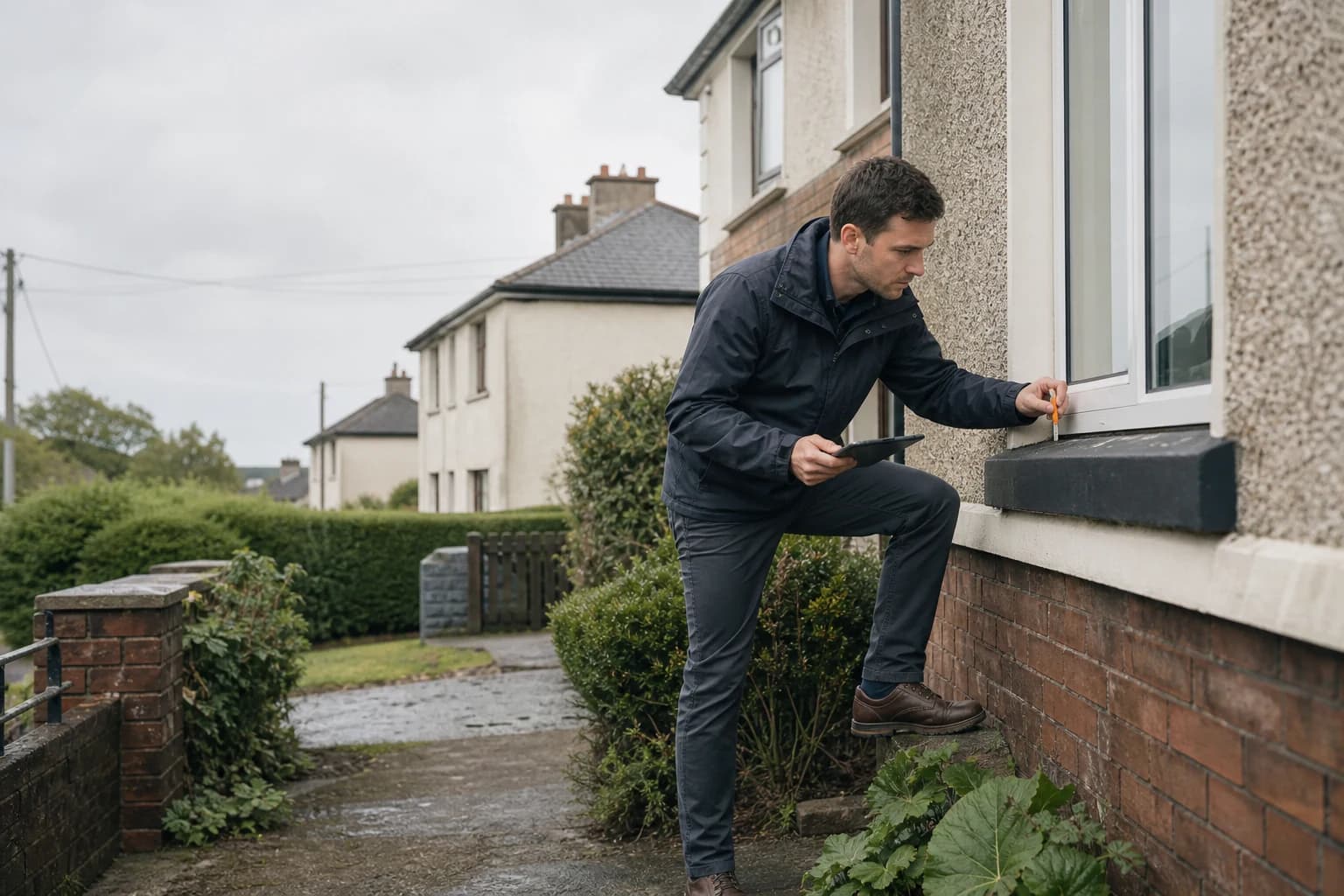
A surveyor inspects the building. The records that decide insurability, running costs and resale (flood history, radon, planning, sold prices) are desk research. You need both.
Free snapshot. No card, no account. Ready in about a minute.
Official data sourced from Irish government agencies












The Basics
What is a pre-purchase survey?
A pre-purchase survey is an inspection of a property's physical condition, carried out for the buyer by a building professional before contracts are signed. The surveyor examines the structure, roof, walls, damp, drainage and visible defects, and reports what would be expensive to fix, typically for €450–€799 (typical published price range across Irish providers, verified 15 August 2026).
It is not the same as the lender's valuation: the valuation is a brief market-value check for the bank. The survey is the inspection that protects you. Under caveat emptor, defects discovered after signing are the buyer's problem. Citizens Information and the Society of Chartered Surveyors Ireland both recommend one for any second-hand purchase.
Book it after your offer is accepted. Before that point, the inexpensive checks below do the filtering: see where the survey sits in the 12-step buying-a-house checklist, and for the inspection itself — the three SCSI survey types and what the surveyor examines room by room — read what a surveyor actually checks.
The Smart Order
Two checks, in the right order.
Surveying every house you bid on would cost thousands. So buyers run the inexpensive desk checks on every contender first, and pay a surveyor once, on the house they are actually buying.
Run the desk checks first
On every serious contender, before you spend a cent on solicitors or surveyors. €29 per property, with a free risk snapshot in about a minute. No card, no account.
Book the survey last
Once your offer is accepted, on the one house you are actually buying. A building professional inspects the structure in person, typically €450–€799.
On the Day
What the surveyor checks.
The physical building, inside and out: structural condition and cracking, the roof and chimneys, damp and ventilation, windows, visible plumbing and wiring, drainage, boundaries as seen on the ground, and attics or crawl spaces where accessible. The output is a written report flagging defects, their likely seriousness, and where specialist follow-up is needed.
Structure
Walls, foundations as visible, cracking patterns and movement.
Roof & chimneys
Coverings, flashings, gutters, visible timbers from the attic.
Damp & ventilation
Rising and penetrating damp, condensation, airflow.
Services (visible)
Plumbing, heating and wiring as visible, not a full test.
The Other Half
What a survey does not check.
The location and its records. A surveyor standing in the building cannot see flood mapping, the EPA radon band, the planning pipeline or what the neighbours' houses sold for. That is desk research on 12 official datasets. None of these 18 checks is part of a standard pre-purchase survey:
Flood Risk
OPW floodinfo.ie
02Radon Risk
EPA
03BER Rating
SEAI
04Property Prices
Property Price Register
05Planning Applications
Local Authority
06Broadband Coverage
ComReg
07Schools
Dept of Education
08Crime Statistics
CSO
09Air Quality
EPA
Noise Levels
EPA
Geology & Subsidence
GSI
Coastal Erosion
OPW / GSI
Mica & Pyrite
gov.ie DCB Scheme / Pyrite Resolution Board
Transport & Commute
NTA / TFI
Healthcare Access
HSE
Local Property Tax
Revenue.ie
Insurance & Carrying Cost
Synthesised (BER + LPT + Flood + Coastal + Radon)
Neighbourhood & Lifestyle
CSO SAPS + Google Places + Sport Ireland
Better Together
Bring the desk checks to your survey.
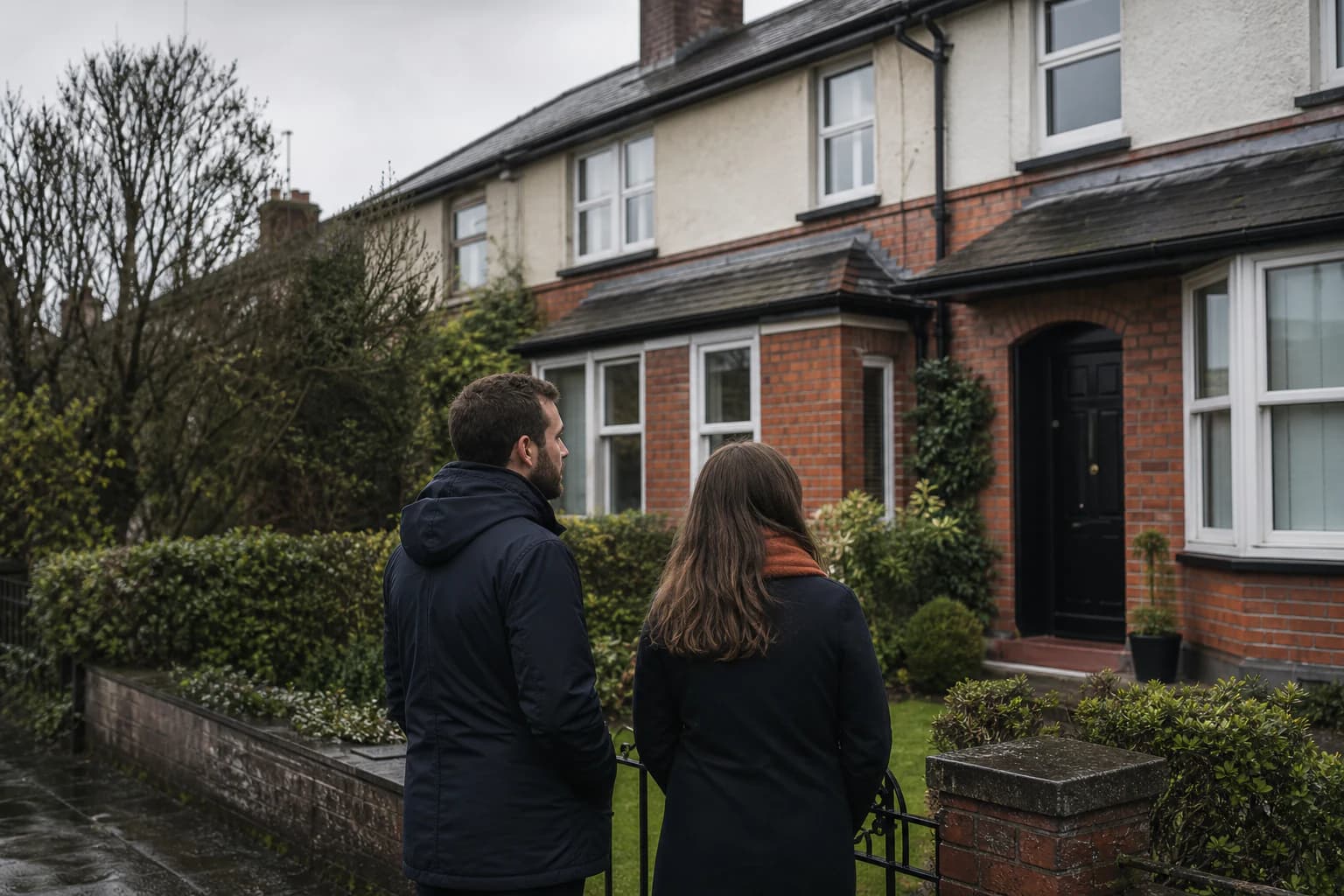
The two halves are strongest combined. A flagged flood history, radon band or mica designation tells the surveyor exactly where to look before you commit.
The two halves are strongest combined. A flagged flood history tells the surveyor to look hard at damp-proofing and drainage. A high radon band is a reason to ask about membranes and sumps. A county-level mica designation is a reason to ask whether the cracking they see warrants an I.S. 465 specialist assessment. Sold-price comparables tell you whether the asking price already reflects what the survey finds.
The desk half takes about a minute and the free snapshot PDF shows every check's risk level; the full 18-check PDF is €29 and arrives in 2-3 minutes. See a full sample report first if you like.
Check the address before the inspection. Free snapshot, no card, no account.
New Builds
Survey vs snag list: which does a new build need?
For a new build, a snag list largely takes the structural survey's place. A snagger inspects the finished house before you close (paintwork, fittings, doors, incomplete work) and the builder fixes the listed items; structural warranties cover certain major defects for years afterwards.
What a snag list shares with a survey: neither checks the location. A brand-new estate can sit on flood-risk land, in the EPA's highest radon band, or beside a planning pipeline that changes the area. Run the desk checks on a new build exactly as you would on a second-hand home.
Frequently Asked Questions
Pre-purchase surveys: FAQs.
How much does a pre-purchase house survey cost in Ireland?
A surveyor's pre-purchase survey typically costs €450–€799 in Ireland, depending on the property's size, age and location (typical published price range across Irish providers, verified 15 August 2026). It usually takes days to weeks to arrange, depending on surveyor availability.
Is a pre-purchase survey legally required in Ireland?
No. No law requires a buyer to commission a survey. Your mortgage lender will require a valuation, but that is a brief market-value check for the bank, not an inspection for you. A survey is strongly recommended all the same: once you sign contracts, defects become your problem under caveat emptor.
What's the difference between a valuation and a survey?
A valuation is commissioned for the lender to confirm the property is adequate security for the mortgage: it is short, market-focused and not a structural assessment. A pre-purchase survey is commissioned by you: a building professional inspects the property's condition (structure, roof, damp, visible defects) and reports what they find before you commit.
When should I book the survey?
After your offer is accepted and before contracts are signed. Surveying every house you bid on would cost thousands, so buyers run the inexpensive desk checks on every contender first (€29 with a free snapshot in about a minute), and pay a surveyor once, on the house they're actually buying.
What should I check before the surveyor visits?
Run the location's data checks and bring the flags to the inspection. If the desk check shows recorded flood events nearby, ask the surveyor to pay particular attention to damp-proofing and drainage; if the address is in the EPA's highest radon band, ask about sump or membrane provision; if the county carries a Defective Concrete Blocks designation, ask whether the visible cracking patterns warrant an I.S. 465 assessment by a specialist.
Do I need a snag list or a survey for a new build?
For a new build, a snag list largely takes the structural survey's place: a snagger inspects the finished house for defects and incomplete work before you close, while structural warranties cover certain major defects. The location checks apply unchanged: new estates can sit on flood-risk land or in high-radon areas like any other address.