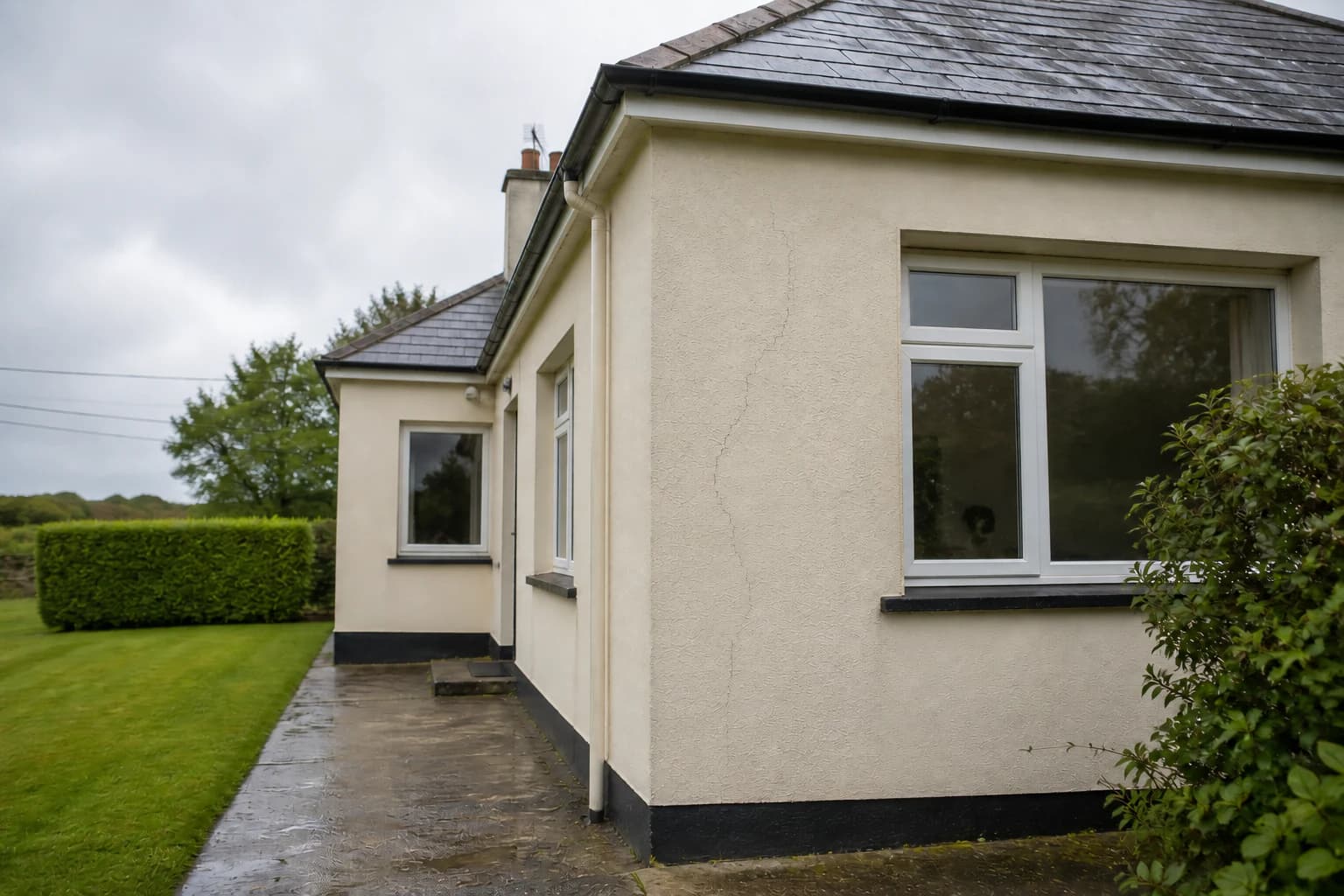
The Pyrite Remediation Scheme — the State scheme that has rebuilt the floors of 2,851 pyrite-damaged homes since 2013 — stops accepting applications on 30 November 2026. The Pyrite Resolution Board has described this as the final opportunity to apply. If you own a home in one of the scheme areas, or you are buying one, the closing date changes your position more than any other property deadline this year. Here is what shuts, who can still get in, and what a buyer should do differently once the door closes.
What actually closes on 30 November 2026
Pyritic heave happens when the crushed-stone hardcore under a ground floor contains reactive pyrite: the stone swells as it oxidises, and the floor above it cracks, lifts and pushes walls out of square. The scheme, run by the Pyrite Resolution Board (PRB) with the Housing Agency, funds the full remediation — dig out the hardcore, replace it, reinstate the floor — at no cost to the homeowner.
The PRB set 30 November 2026 as the last day it will accept applications. An application received before the deadline stays in the pipeline and is assessed as normal; damage that only becomes claim-worthy after the deadline has no scheme to apply to. That asymmetry is the whole story: for eligible homes with borderline damage, the option to apply is itself worth protecting before it lapses.
Who can still apply
Eligibility is unchanged by the deadline — what changes is that the clock now enforces it. The home must:
- Sit in a scheme area: the PRB's 2026 scheme covers parts of Dublin, Kildare, Limerick, Meath, Offaly, Westmeath (including all four Dublin local-authority areas and Limerick City & County).
- Date from the pyrite years: built between 1997–2013, when the affected quarries' hardcore was in circulation.
- Show qualifying damage: a Building Condition Assessment with a Damage Condition Rating of 2 — or, since the scheme was widened in 2026, a rating of 1 with evidence the damage is progressing (PRB / Department of Housing announcement, February 2026).
If cracked floors, doors that stopped closing or stepped cracking in the walls have you wondering, the sequence is: commission the Building Condition Assessment now, then apply before the deadline. An assessment that lands after 30 November 2026 is a report you cannot act on through the scheme.
What the deadline means if you are buying
For buyers in the scheme counties, the closing date splits every listing built 1997–2013 into three categories, and the questions differ for each:
| The house... | What to ask for |
|---|---|
| Was remediated under the scheme | The remediation certificate and completion documents — a remediated floor is an engineered, documented repair, and the paper trail is part of the house's value. |
| Has an application in the pipeline | The application reference and stage. Applications lodged before the deadline continue; ask your solicitor how the works and any grant conditions transfer with the sale. |
| Was never assessed | Evidence, not assurances: after 30 November 2026 there is no State scheme behind the floor, so any future pyritic heave is priced into the house — yours to carry. Have the surveyor look hard at floors, and ask the seller directly about pyrite in the requisitions. |
Scheme facts: Pyrite Resolution Board (pyriteboard.ie); designations as verified in our data, 6 Aug 2026
Note what the deadline does not change: the Enhanced Defective Concrete Blocks Grant Scheme — the separate scheme for defective concrete blocks (the “mica” crisis), with grants up to €462,000 — remains open, and its designated counties are different. Our mica and pyrite explainer walks through both schemes county by county.
How to check any address before you bid
The scheme designations are public and checking them costs nothing: our mica & pyrite pages cover every county — for example Dublin, Kildare and Meath — with the tri-state designation (designated, designated in part, or not) for both schemes. What no public list tells you is whether an individual house was assessed or remediated: that lives in the seller's documents, so use the area designation to decide how hard to push for them.
30 November 2026: after this, the scheme can't help
A PropertyPack report puts the mica & pyrite designations for any Eircode alongside 18 official checks — flood history, radon, planning, sold prices and more — with a free snapshot in about a minute and the full report for €29. If the house you are watching was built 1997–2013 in a scheme county, run the check before the deadline shapes your negotiation, and see the full cost of buying to plan what comes after the bid.
About this article
Written by the PropertyPack.ie team and published 28 September 2026. Figures render directly from the official datasets behind our reports, so they update when the underlying record does. General information for Irish home buyers, not legal, financial or tax advice.