Defective concrete blocks (the “mica” crisis) and pyritic heave are the two building-material failures serious enough that the State runs dedicated remediation schemes for them. If you’re buying in an affected county, the scheme designations are public, and checking them takes minutes. Here’s what each scheme covers, which counties are designated, and (just as important) what a designation does not tell you about an individual house.
Two different problems, two different schemes
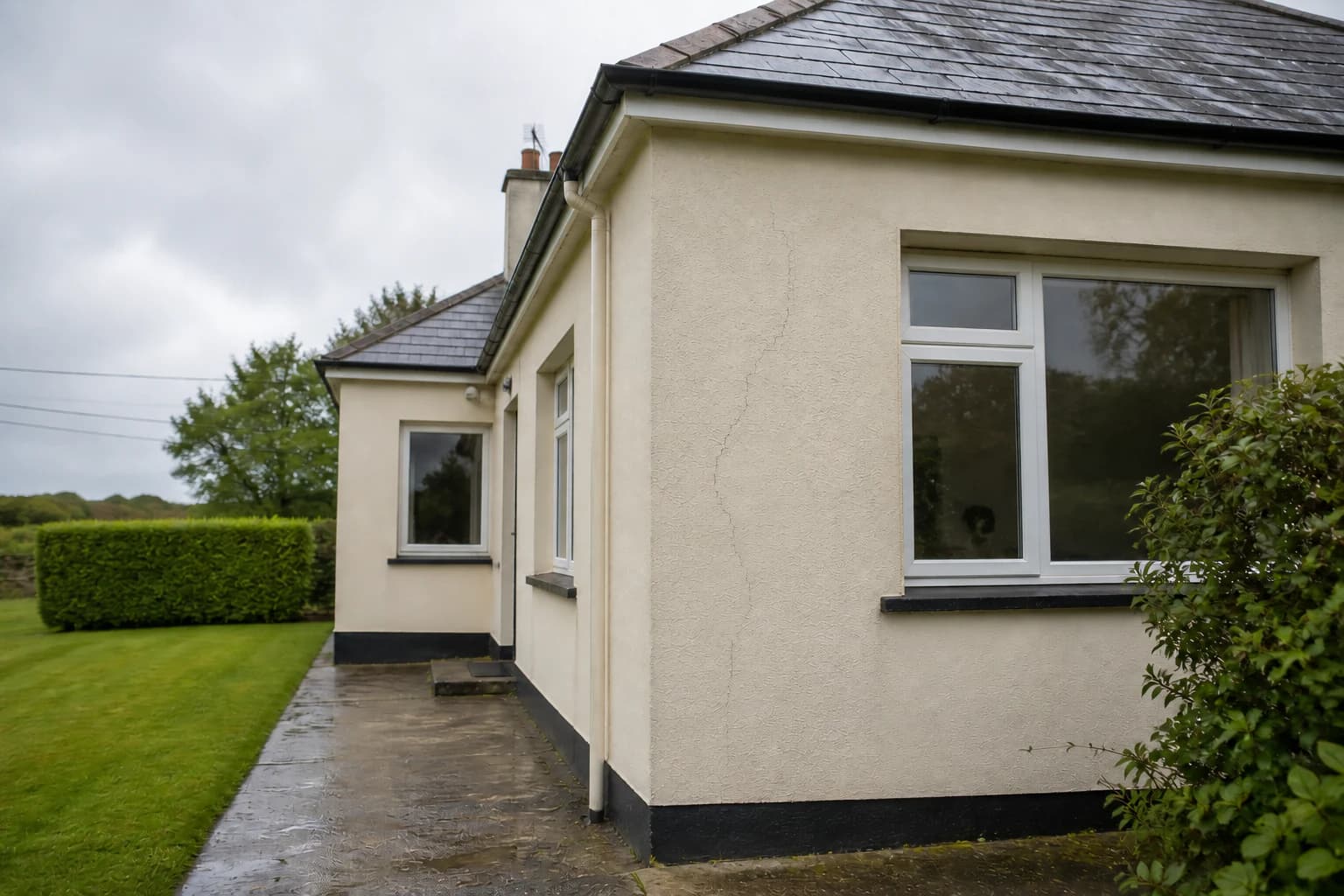
Enhanced Defective Concrete Blocks Grant Scheme: covers homes damaged by defective blocks (mica/pyrrhotite), which cause progressive cracking in the walls themselves. It operates under the Remediation of Dwellings Damaged by the Use of Defective Concrete Blocks Act 2022, as amended 2025, with grants of up to €462,000. Per the official scheme statistics to end June 2026: 3,598 applications, 542 remediations completed, and €361m spent to date (source: gov.ie (Department of Housing, Local Government and Heritage)).
Pyrite Remediation Scheme: covers pyritic heave (the sub-floor hardcore swelling and cracking floors) in eligible dwellings built 1997–2013. It is run by the Pyrite Resolution Board, under which 2,851 homes have been remediated since 2013.
Deadline: the pyrite scheme closes 30 November 2026
The Pyrite Resolution Board has set 30 November 2026 as the final date for applications. If you’re buying (or already own) an affected home in a designated area, an application after that date is not possible under the current scheme. Factor this into any purchase where pyritic heave is a live question — our deadline guide covers who can still apply and what buyers should ask once the scheme shuts.
Designated counties
Designations are made at local-authority level. Every county with a designation under either scheme:
| County | Defective blocks (DCB) scheme | Pyrite remediation area |
|---|---|---|
| Carlow | Designated | No |
| Clare | Designated | No |
| Donegal | Designated | No |
| Dublin | In part: parts of Fingal only, Rush, Skerries, Lusk and Ballyboughal | Yes |
| Kildare | Not designated | Yes |
| Limerick | Designated | Yes |
| Mayo | Designated | No |
| Meath | In part: certain parts of the county only | Yes |
| Offaly | Not designated | Yes |
| Sligo | Designated | No |
| Westmeath | Not designated | Yes |
| Wexford | In part: Bunclody and Ferns areas only | No |
Sources: gov.ie (Department of Housing, Local Government and Heritage) · Pyrite Resolution Board
Every county’s current designation, alongside the scheme statistics, is on its check page, for example Donegal, Mayo and Clare.
What a designation can (and cannot) tell you
This distinction matters more than anything else on this page. A scheme designation tells you the local authority area has a recognised problem serious enough for State remediation. It does not tell you whether the house you’re bidding on is affected. Two doors on the same road can differ entirely depending on which blocks or hardcore went into them.
- A data check answers the area question: is this address in a designated area, how active is the scheme nationally, and should defective materials be on your survey brief at all?
- Only testing answers the building question. Confirming an individual home means assessment under I.S. 465 (revised edition published June 2026) by a competent professional, typically involving core sampling of the blockwork.
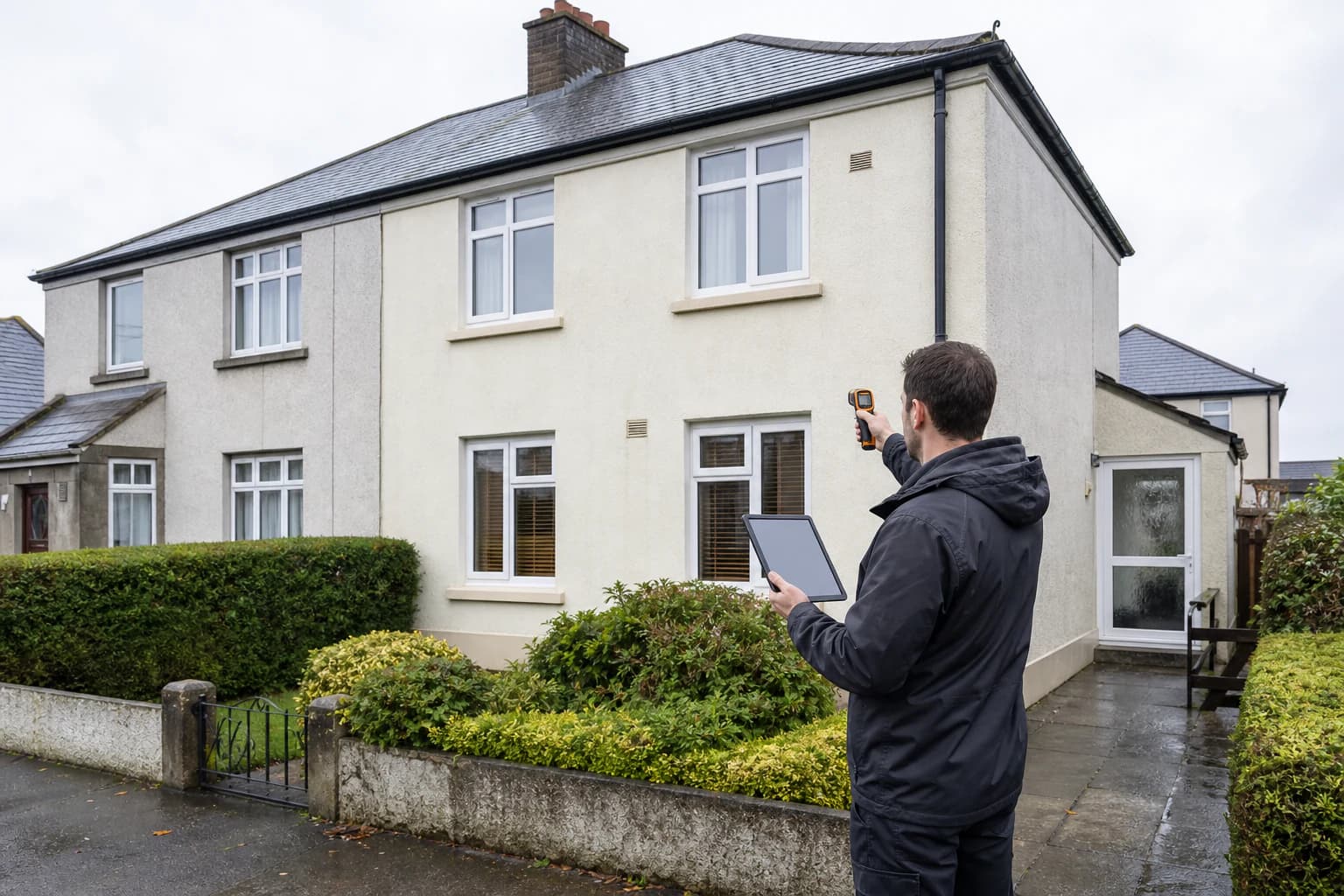
- Ask the right survey question. In a designated county, tell your surveyor explicitly that you want defective concrete blocks or pyrite considered. A standard pre-purchase survey is visual and won’t include lab testing unless you raise it.
Mica & pyrite is one of 18 checks in every report
A PropertyPack report flags the official scheme designations for any Eircode’s county automatically (labelled at the confidence level the data actually supports) alongside flood, radon, BER and the rest of the 18 official checks. It’s the before-you-bid step; the full buying checklist covers what comes after.
About this article
Written by the PropertyPack.ie team and published 17 August 2026. Figures render directly from the official datasets behind our reports, so they update when the underlying record does. General information for Irish home buyers, not legal, financial or tax advice.